
Meeting attendees are responsible for arranging their own travel and to ensure that they have the documentation required for entering Norway.
Travel requirements for entering Norway
Check if you need a visa to visit Norway. If you need a visa, follow the instructions under “Attend a cultural event or visit an organisation” and email gb33@gbif.org for an invitation letter.
Norwegian Ministry of Foreign Affairs (Norwegian Embassies by country)
Insurance
Meeting attendees are advised to ensure appropriate comprehensive health and travel insurance for travel to Norway.
Arriving in Norway
International airports
The primary airport for international arrivals is Gardermoen (OSL) https://www.avinor.no/en/airport/oslo/
- 19 minutes by airport train to the Oslo city center
- Direct routes to 112 international destinations
- Contactless and self-service check-in, bag-drop, and boarding
- Europe’s most punctual major airport according to Eurocontrol statistics.
- We recommend using the main airport, OSL.
Another option is Charter airport (Torp, Sandefjord) https://torp.no/
- 1,5 hour by train or bus to the Oslo city center
- Transportation from the airport
Gardermoen Airport has very good public transport connections to and from the airport. You can choose between train (Airport Express Train or Regional trains) or various bus options.
- Airport express train: https://flytoget.no/ (every 10 min, 268 kr = 25 euro)
- Regional train, VY: http://www.vy.no/ (approx every 30 min, 134 kr = 12,4 euro)
The airport trains stop at the main Oslo Central Station, and at the secondary train station Nationaltheatret (National Theatre), which is very close to the University of Oslo campus City Centre.
You can also take a taxi from the airport. It takes about 40 minutes to drive from the airport to Oslo Central Station. More information available at https://www.avinor.no/en/airport/oslo/info/Taxi/.
Train
It is also possible to arrive in Oslo by train. The main central train station in Oslo (Oslo S) is located downtown within walking distance to venue and hotels.
Local transportation
It is easy to get around in Oslo, either by foot or by using public transportation. Everything in the city centre is within walking distance. All public transport in Oslo and the surrounding boroughs are included in one ticketing system. The public transport system in Oslo is called ‘Ruter’ and their ticketing system includes city and regional buses, trams, undergrounds, local trains and ferries (the ferries to Bygdøy are not included).
Hotels
GB33 attendees are asked to organize their own accommodation.
The local organizers have made block bookings for the below hotels. The link with the discount code gives 15% discount from the current price at the time the booking is made. The hotel booking can be cancelled free of charge up to 16:00 on the first day of the reservation (scheduled arrival at the hotel). The discount is valid from 19 September to 4 October.
| Hotel | Details |
|---|---|
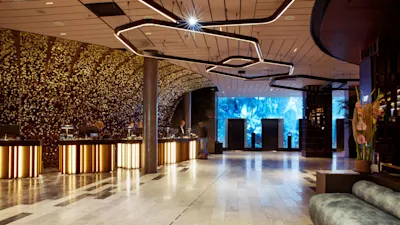 |
Clarion Hotel The Hub 810 rooms, 190 m from Central Station Discount booking link: https://app.mews.com/distributor/977dc9ba-a500-428b-b632-b0d700b9691f?mewsVoucherCode=TDWG%202026 |
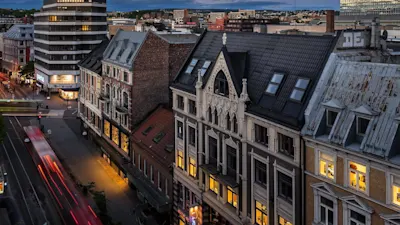 |
Home Hotel Folketeateret 160 rooms, 350 m to Central Station Discount booking link: https://app.mews.com/distributor/39cbfe76-47e3-406d-8006-afef00895b30?mewsVoucherCode=GBIF25 |
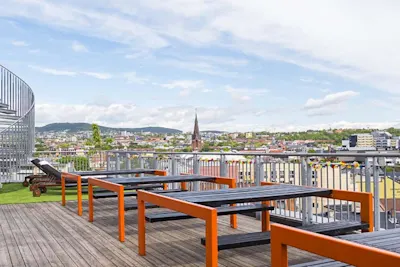 |
Comfort Hotel Xpress Youngstorget 172 rooms, 700 m from Central Station Discount booking link: https://app.mews.com/distributor/54aa6abf-1b4e-4526-8b1e-afa900a6ef75?mewsVoucherCode=GBIF25 |
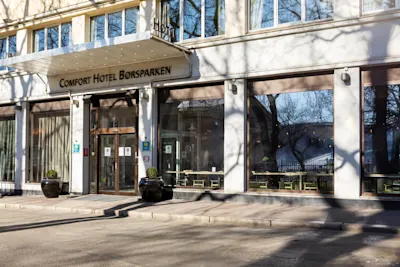 |
Comfort Hotel Børsparken 248 rooms, 400 m from Central Station Discount booking link: https://app.mews.com/distributor/763711fe-eb1b-4f16-ac99-af95009ad799?mewsVoucherCode=GBIF25 |
Other hotels in Oslo: You can find a list of other hotels in Oslo here
Venues
Please see the map for exact locations of venues.
GBIF committee meetings - 28 September 2026
The GBIF committee meetings on 28 September will take place at the University of Oslo Natural History Museum at university campus Tøyen.
Tøyen Hovedgård
Trondheimsveien 23B
0562 Oslo, Norway
09:00-12:30:
- Budget Committee meeting: Meeting room 2
- Science Committee meeting: Meeting room 1 - 104
- Nodes Steering Group meeting: Meeting room 110
13:30-17:00:
- Executive Committee meeting: Meeting room 110
Icebreaker - 28 September 2026, 18:00-21:00
The Icebreaker will take place at Klimahuset (Climate House) at university campus Tøyen.
Klimahuset
Sars’ gate 1
0562 Oslo, Norway
GBIF Governing Board meeting - 29 September-1 October 2026, 09:00-17:00
The Governing Board meeting will take place in Auditorium 1 at the Domus Juridica at Campus Centrum.
Domus Juridica
Kristian Augusts gate 17
0164 Oslo, Norway
Please note that the lunch break will take place in a different building just across the road, so we advise delegates to bring a coat and/or umbrella to be prepared for bad weather.
Oslo fjord tour (boat trip) - 30 September 2026
The hosted dinner has been converted into a boat trip of the Oslo fjord. The meeting point is Langkaia (opposite the Opera House).
Havnelageret
Langkaia 1
0150 Oslo, Norway
As the boat leaves at 19:00, it is important to be at the meeting point at 18:30 to be ready for boarding at 18:40.
Dinner and 1 glass of wine will be served during the trip.
The tour offers a view from historic Shipyards to modern lifestyle.
The adventure first leads to Pipervika. Today, life pulses here between the City Hall, Akershus Fortress, and the Aker Brygge promenade.
The journey continues past:
• Tjuvholmen: Oslo’s trendiest district with stylish galleries and restaurants right on the water.
• Frognerkilen: A huge marina in summer with views of the magnificent Oscarshall summer palace, belonging to the Norwegian Royal Family.
• Bygdøy & Dyna Fyr: We pass the museum peninsula and the striking little Dyna Fyr lighthouse.
Science Symposium - 2 October 2026, 09:00-16:15
The Science Symposium will take place at the University of Oslo Aula in the Domus Accademia, Auditorium 4.
Domus Juridica
Karl Johans gt. 47
0162 Oslo, Norway
UiO Campus City Centre:
- https://www.uio.no/english/about/getting-around/areas/city-centre/
- Photos: https://uio.fotoware.cloud/fotoweb/archives/5051-UiO-Bygninger/+/sentrum/
Map
- Google Map (GB33 venues): https://maps.app.goo.gl/ciRZsPxonxAKkkxd7
General information
Practical information from the Tourist Information Oslo: https://www.visitoslo.com/en/oslo/practical-information/
Climate and weather
Typical weather in September, high 16° C, low 9° C, 9 days of rain
- https://www.yr.no/nb/v%C3%A6rvarsel/daglig-tabell/1-72837/Norge/Oslo/Oslo/Oslo
- https://www.visitnorway.com/plan-your-trip/seasons-climate/
Electricity
Norway has 220 volts, AC of 50 Hertz, a European continental-style two-pin plug
Internet and telecommunications
Internet in Norway is advanced, featuring extensive 5G coverage, widespread fiber-optic availability, and high speeds.
- Mobile internet providers include Telenor and Telia
- The university campus has Edurom and UioGuest WiFi options: https://www.uio.no/english/services/it/network/wireless/help/uioguest.html
- We will also provide a meeting WiFi network for the GB33 meeting
Language
Most people understand and speak English very well. Norwegian is a Scandinavian language.
Money
Debit cards and credit cards are widely accepted and are the preferred mode of payment (Visa, EuroCard, etc.). Cash is accepted, but rarely used.
- ATMs are rare to find; you may find ATMs at the Oslo Central Station
- Opening hours for banks: 09:00 to 15:30 on weekdays (closed weekends)
Opening hours (for shops)
- Larger shops in the city centre close around 18:00 (6 pm)
- Smaller shops usually close around 17:00 (5 pm)
- Most shops are closed on Sundays
Personal security
Oslo is a safe city with a relatively low crime rate. However, it is recommended to take measures to avoid pick-pockets in crowded areas.
Health
- Tap water in Oslo is of excellent quality
- Oslo Emergency Ward is open 24 hours every day: https://www.visitoslo.com/en/product/?tlp=2983953
- Pharmacies can be found all over Oslo. The pharmacy across the street from the Central Station is open 24 hours.
- No particular vaccination is required: https://www.fhi.no/en/in/travel/traveladvice-vaccines/europe/norway/
Norwegian restaurants
- https://www.visitoslo.com/en/articles/norwegian-restaurants/
- https://www.visitoslo.com/en/restaurants-nightlife/restaurants/
- https://www.visitnorway.com/places-to-go/eastern-norway/oslo/food-drink/
Tipping
Tipping in Oslo is not mandatory. 5-15% tipping or rounding to the nearest 10 or 100 kr is usual for restaurants if the service is good.
- Most restaurants close the kitchen at 21:30
Tourist information
- Tourist information Oslo: https://www.visitoslo.com/en/
- Tourist information Norway: https://www.visitnorway.com/